
NEWS
Iran Demanded a US Destroyer Surrender – The 12-Minute Breakout That Followed Left the Strait i… – HTT

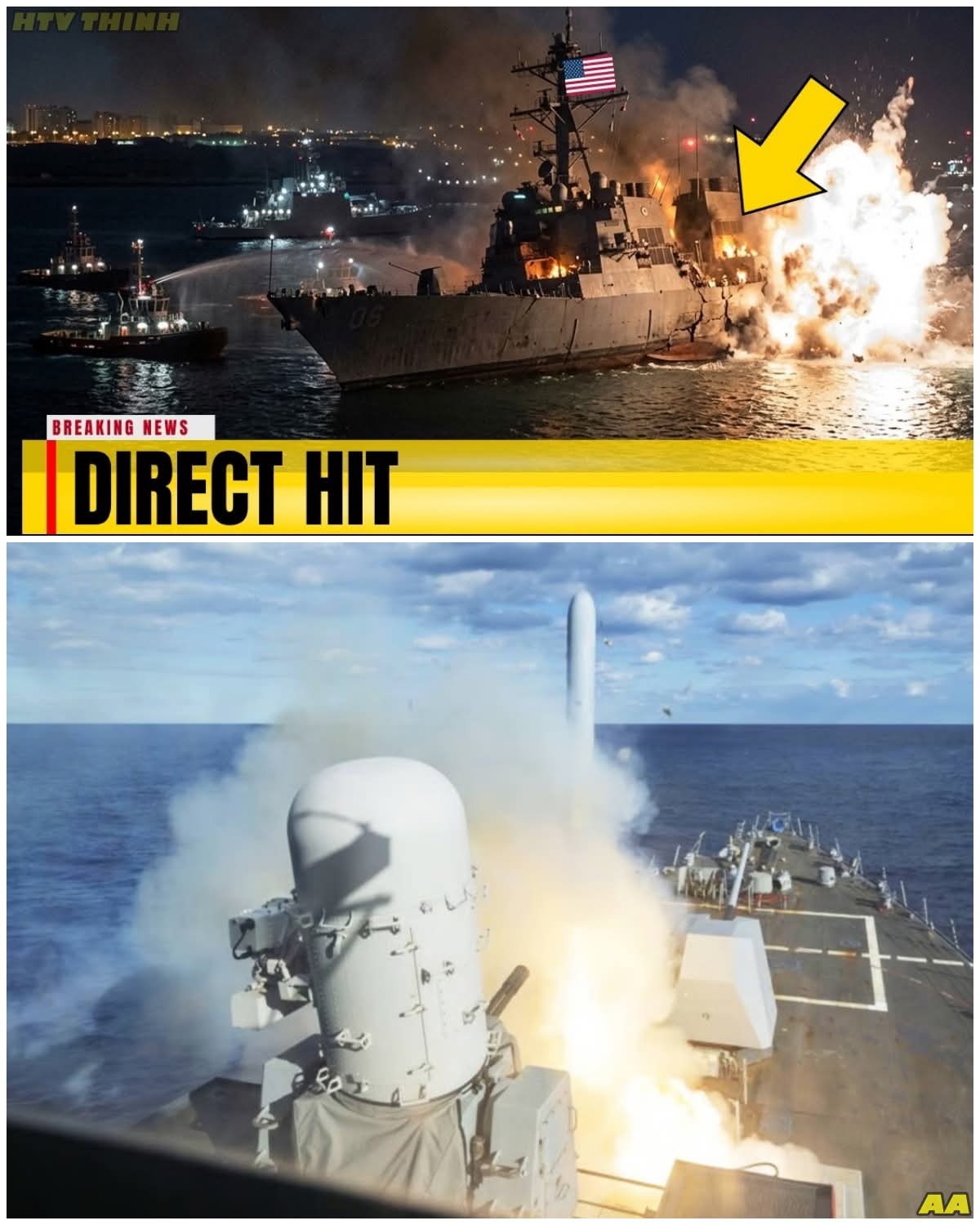
Iran Demanded a US Destroyer Surrender — The 12-Minute Breakout That Followed Left the Strait i…
There are places in the Persian Gulf where a warship has nowhere to run.
Narrow channels between islands, shallow water passages near the coast, and choke points where navigable depth compresses a 9,700 ton destroyer into a lane barely 800 meters wide create a perilous environment.
In open water, a destroyer can maneuver, accelerate, turn, and create distance.
But in a narrow channel, it can only go forward or backward.
And if something is waiting at both ends, it can’t go anywhere at all.
The Iranian Revolutionary Guard Corps
This transit had been scheduled weeks in advance, vetted by CENTCOM legal staff, approved by the Fifth Fleet commander, and briefed to the National Security Council.
This was not a casual patrol; it was a deliberate demonstration that U.S. warships could transit international waters adjacent to Iranian territory.
Iran had protested the planned transit through diplomatic channels, but the protest was noted and rejected.
The transit proceeded.
At 0612 hours local time, the Laboon entered the channel’s western approach at 15 knots.
The ship was at heightened readiness, with weapon systems manned, a Seahawk helicopter on standby, and full bridge watch with additional lookouts posted.
An MQ-8C Fire Scout drone was overhead providing continuous surveillance.
The intelligence picture was concerning but not alarming.
IRGCN activity around Keshum Island had been elevated for 48 hours.
Fast boats had been observed at multiple piers along the island’s southern coast.
Coastal radar installations on Keshum had increased their sweep rates, consistent with Iran monitoring a U.S. transit, a standard behavior during freedom of navigation operations.
At 0618, the Laboon entered the channel’s narrow section, approximately 1,200 meters wide.
At this point, the ship was centered in the navigable lane, equidistant from the shallow areas on each side.
At 0621, the Fire Scout detected contacts ahead.
Six fast boats were positioned in a loose line across the channel’s eastern exit, stationary, engines running, spaced approximately 200 meters apart, effectively blocking the navigable passage.
Simultaneously, the drone’s rear-facing camera detected contacts behind.
Six more boats were entering the channel’s western approach, the same approach the Laboon had just transited, at a speed of 30 knots heading east into the channel behind the destroyer.
The Laboon was now in the middle of a 15-nautical-mile channel with hostile boats at both ends.
The captain, a commander with 18 years of surface warfare experience, assessed the situation in under 15 seconds.
Ahead, six boats were blocking the exit.
If they were armed, and at this range, the Fire Scout confirmed weapons mounts on at least four, they could fire on the Laboon as it approached the narrow section.
The ship would be heading directly at them with no room to maneuver laterally behind.
The six boats closing at 30 knots would reach the Laboon’s current position in approximately eight minutes.
Once they arrived, the destroyer would be taking fire from both directions in a channel too narrow to evade.
The shallow water reefs were within 400 meters on each beam, leaving no escape laterally.
Grounding a destroyer would be catastrophic; not just damage, but humiliation.
An American warship stuck on an Iranian reef would be the propaganda victory of the century.
The captain had one tactical advantage: the narrow channel worked both ways.
The IRGCN boats blocking the exit were confined to the same 1,200-meter channel width.
They couldn’t spread out or flank wide; they were bunched in a kill zone as much as the destroyer was.
He chose to attack forward, driving through the blocking force.
Using the ship’s momentum and firepower to punch through six boats in a narrow channel and reach open water.
General quarters were called at 0622.
323 sailors manned their battle stations.
Speed increased to 25 knots in the narrow channel.
This was aggressive, reducing reaction time to navigational hazards, wake effects on the shallow margins, and decreasing time for tactical decision-making.
At 0623, radio warnings were broadcast to the blocking force ahead on Channel 16 and IRGCN frequencies.
Vessels blocking the channel, this is United States Navy warship. You are illegally obstructing a navigable waterway. Clear the channel immediately.”
The response was in Farsi: “American warship. You are in Iranian territorial waters. Shut down your engines and prepare for escort to Iranian port.”
The Laboon was in international waters.
The channel, despite its proximity to Iran, lies within a recognized international transit corridor.
The demand was baseless.
At 0624, the Laboon closed to 3,000 meters from the blocking force.
The six boats remained stationary, their weapons visible: KPV and DShK machine guns on forward mounts.
Video Shows Iran Firing Missiles in Warning to Enemies – Newsweek
One boat appeared to carry a larger mount, later identified as a 106 mm recoilless rifle.
The boats behind the pursuing force were now at the channel’s western entrance.
They had increased speed to 40 knots, with an estimated time of arrival to the Laboon’s position of approximately five minutes.
Five minutes to break through or be caught in a crossfire.
At 0625, the captain ordered the Seahawk to launch.
The helicopter’s crew had been on ready five.
Pre-flight checks were complete, and engines were running.
The launch took 90 seconds.
The Seahawk climbed to 300 feet and immediately identified all 12 boats—six ahead, six behind.