
NEWS
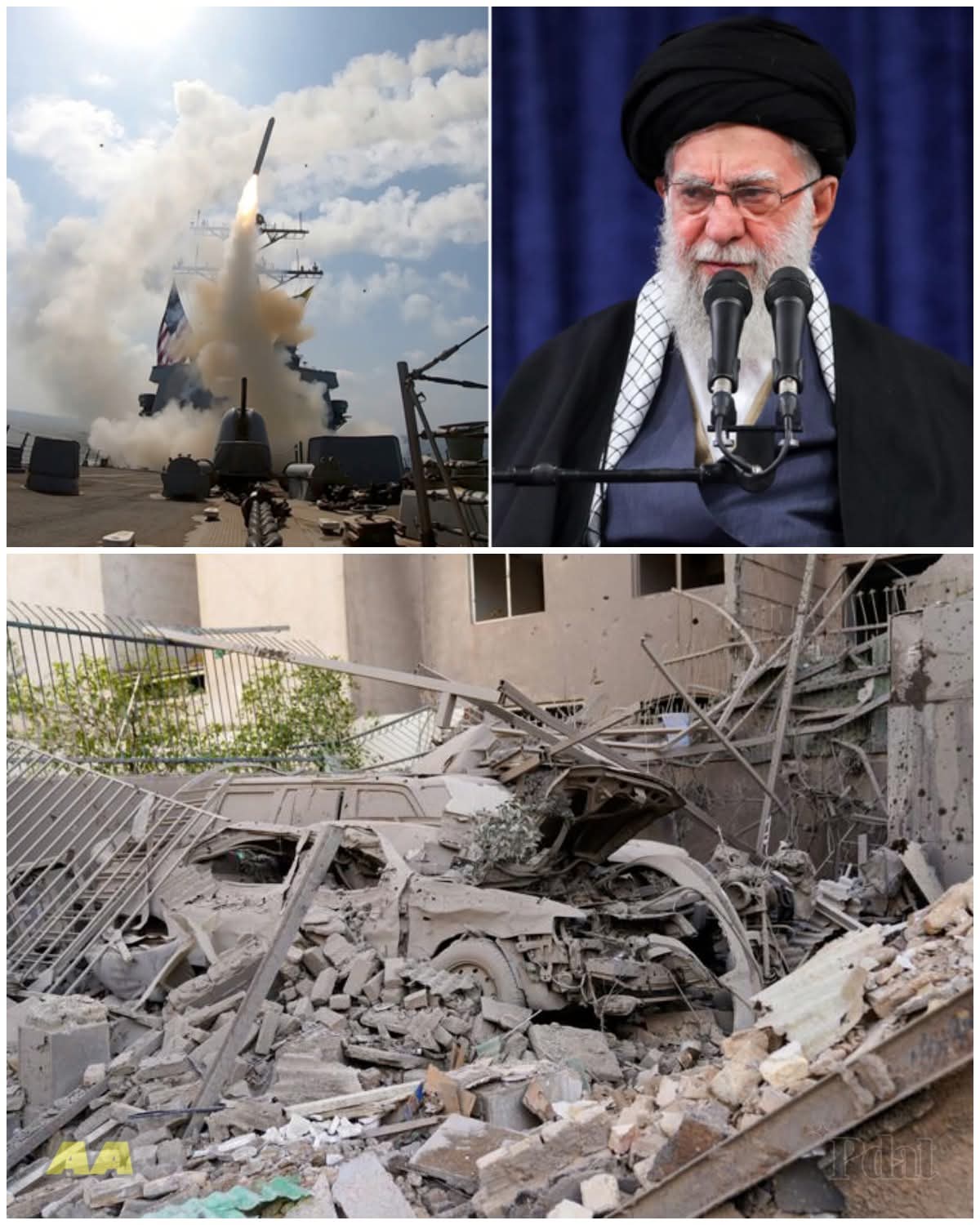
How the U.S. and Israel carried out a str!ke that k.i.l.l.e.d Iran’s Supreme Leader Khamenei FULL ARTICLE: At 9:27 a.m. Tehran time, the sky split open. What began as an intelligence alert about a rare leadership gathering ended in the largest coordinated aerial assault the Middle East had ever witnessed. By nightfall, one of the world’s most powerful and controversial leaders was reportedly dead—and the balance of power in the region had shifted in a single morning. Read the full story at the link in the comments below.

How US & Israeli Strike K.I.L.L.E.D Iran’s Supreme Leader Khamenei
On the morning of Saturday, February 28, 2026, as Iran began its work week during the holy month of Ramadan, senior American and Israeli intelligence officials confirmed what they had been waiting months to see: a rare convergence of Iran’s highest-ranking political and military leadership inside a secured compound in downtown Tehran.
According to senior defense sources, the original operational plan called for a nighttime strike.
Darkness would provide concealment, reduce civilian movement, and maximize surprise.
But when surveillance assets confirmed that between five and ten of Iran’s most powerful figures had gathered simultaneously, the calculus changed.
The meeting was described internally as a “target of opportunity” that might not present itself again.
thumbnail
At approximately 9:27 a.m. local time, that opportunity was seized.
In what Israeli officials later described as the largest air operation in the history of the Israeli Air Force, roughly 200 fighter jets launched a synchronized assault on more than 500 targets across western and central Iran.
The strikes were conducted in coordination with United States military operations unfolding in parallel across the region.
The first wave focused on Tehran’s political and security core.
Multiple high-profile government complexes were hit in rapid succession, including facilities associated with Iran’s defense establishment and national security leadership.
Among the primary targets was a fortified compound linked to Supreme Leader Ayatollah Ali Khamenei.
Israeli aircraft reportedly dropped dozens of precision-guided munitions on that complex alone.
Satellite imagery released hours later showed extensive structural damage, with sections reduced to rubble and smoke rising above the site.
Reports from Israeli media outlets, including Channel 12, cited sources indicating that Khamenei had been underground at the time of the strike.
However, those same reports suggested he was not in his most heavily reinforced bunker when the attack occurred.
Later that afternoon, President Donald Trump announced on social media that Khamenei had been killed, describing the strike as the result of close U.S. -Israeli coordination and years of intelligence tracking.
Israeli Prime Minister Benjamin Netanyahu confirmed that the operation had been planned over an extended period and characterized it as a decisive blow against Iran’s leadership structure.
An Israeli official later told U.S. media outlets that dozens of senior Iranian officials were believed to have been killed in the opening strikes in Tehran.
Among those reportedly eliminated were high-ranking members of Iran’s defense council, senior Revolutionary Guard commanders, and officials linked to missile development and intelligence coordination.
Iran Supreme Leader Khamenei killed in US-Israeli airstrikes – PRESS Insider | India’s global voice
If confirmed in full, the losses would represent one of the most significant decapitation strikes against a sovereign government in modern Middle Eastern history.
While Israeli jets targeted leadership nodes, the United States launched what defense officials described as a parallel operation—focusing on ballistic missile facilities, nuclear-related infrastructure, air defense systems, and Revolutionary Guard installations.
Naval assets positioned in the region supported the effort, signaling a comprehensive attempt to degrade Iran’s strategic military capabilities.
A senior U.S. defense official described the daytime strike as “massive and wildly bold,” noting that it occurred on a Saturday morning during Ramadan and coincided with the Jewish Sabbath—timing that may have contributed to the element of surprise.
Cała Polska na to patrzy 😱

WIADOMOŚCI Z OSTATNIEJ WIADOMOŚCI: 🇺🇸 Nacisk na impeachment nabiera tempa w miarę zbliżania się terminu Według doniesień Demokraci w Izbie Reprezentantów zbliżają się do krytycznego progu, w miarę jak intensyfikują się wysiłki mające na celu przyspieszenie procesu impeachmentu przeciwko Donaldowi Trumpowi przed zbliżającym się ostatecznym terminem przypadającym na 31 marca. Według pojawiających się raportów do dalszych działań brakuje już tylko dwóch głosów, co wywrze znaczną presję na prawodawców, co może stać się…👇

NIE WAŻ SIĘ DOTYKAĆ MOJEJ CÓRKI!” Tomasz Świątek, ojciec Igi Świątek, przerwał milczenie, aby publicznie bronić swojej córki, potępiając to, co określił jako poważną niesprawiedliwość mającą miejsce we współczesnym tenisie. “Jak można być tak okrutnym, aby porzucić, krytykować i zniszczyć ducha 24-letniej dziewczyny, która niemal całą młodość poświęciła tenisowi na chwałę Polski, a potem została skrytykowana za swoją narodowość? Czy jesteś zły krytykując kogoś, kto przynosi chwałę Twojemu krajowi?” Tomasz Świątek zrobił pauzę, podniósł wzrok i wygłosił mrożące krew w żyłach 12 słów ostrzeżenie – bezpośrednie i szokujące oświadczenie, które natychmiast wstrząsnęło Miami Open, wywołując zamieszanie w mediach i pozostawiając cały tenisowy świat bez słowa…
SZOK w telewizji na żywo: „TO GŁUPI SPORTOWCA”. Te pięć słów Whoopi Goldberg natychmiast przyniosło odwrotny skutek, gdy Iga Świątek, występująca w transmisji na żywo jako gość, spojrzała prosto w kamerę i wygłosiła jedno zdanie, które zmroziło całe studio. W ciągu kilku minut klip rozprzestrzenił się błyskawicznie w mediach społecznościowych — miliony obejrzały dokładnie moment, w którym Iga Świątek zamieniła bezceremonialną obelgę w ogólnonarodowy sygnał alarmowy. To, co powiedziała następnie, nie tylko uciszyło Whoopi – wywołało falę szoku w gospodarstwach domowych w całym kraju, wprawiając widzów w osłupienie, a w Internecie wybuchła fala…👇
👑 Nikt nie mógł się spodziewać, że w centrum tenisowego świata nazwisko Iga Świątek zostanie nagle wymienione przez samą hiszpańską rodzinę królewską. Podczas międzynarodowej imprezy młodzieżowej w Madrycie księżniczka Leonor pozostawiła całą publiczność w zdumionej ciszy, gdy niespodziewanie z głębokimi wzruszeniami opowiedziała o Idze: “Są sportowcy, którzy nie rywalizują tylko dla zwycięstwa… ale dla wiary. Iga Świątek jest jedną z nich”. Pochwała ta natychmiast rozeszła się po całym świecie, gdyż księżniczka – następczyni tronu – publicznie pochwaliła utalentowaną polską tenisistkę. Ale tym, co naprawdę zszokowało świat, było nieoczekiwane zaproszenie, które księżna Leonor wysłała bezpośrednio do Igi Świątek, subtelny, ale mocny gest dyplomatyczny, uznanie dla rosnących wpływów Igi, a nawet znak, że Hiszpania chce „głębiej” „połączyć się” z międzynarodowymi talentami…👇

Z ostatniej chwili: „PIERWSZY W HISTORII TENISISTKA, KTÓRA OTRZYMAŁA CAŁĄ BRĄZOWĄ STATUĘ W HOLLYWOOD WALK OF FAME — A NAZYWA SIĘ Iga Świątek. Nikt nie przechodzi obok pomnika i nie milczy. Hollywood Boulevard zatrzymał się tego dnia. Nie na premierę filmową. Nie dla celebryty. Jak na dziewczynę trzymającą rakietę tenisową – odlaną z brązu, z podniesioną ręką, z charakterystycznym spokojnym i skupionym uśmiechem. Iga Świątek nie tylko dostała gwiazdę na ziemię. Stała się jedną z nielicznych zawodniczek sportowych, które mogły tam stać, całe ciało, uwiecznione w metalu. Statua ukazuje coś prawdziwego – nie tylko jej zwycięstwa, ale także spokój i determinację, jaką on niesie…👇
SZOKUJĄCY: „Jestem dumny ze swojego kraju i nikt nie ma prawa go deptać”. Iga Świątek odebrała Lesley Stahl mowę, a cała sala wybuchła wiwatami po jej brutalnie ostrej odpowiedzi. Lesley poczyniła drwiące uwagi na temat pochodzenia Igi, mówiąc: „Prędzej czy później opuścisz ten biedny kraj i i tak będziesz ubiegać się o obywatelstwo amerykańskie”. Przedstawiła Igę i jej rodzinę jako chciwych ludzi trzymających się Stanów Zjednoczonych. Iga odpowiedziała ostro, bo to sprawa honoru i poważna obraza jej kraju. Spokojne, niezachwiane, ostre jak brzytwa i intensywne, 30-sekundowe oświadczenie Igi przekreśliło linię i całkowicie zmieniło nastawienie wielu ludzi, pozostawiając Lesley całkowicie upokorzoną…👇
